


The result is a persistent, heavy fatigue that doesn’t improve the way normal tiredness does after a good night’s sleep.
If you find yourself consistently exhausted despite sleeping adequately and can’t identify a clear reason, it’s worth mentioning to your doctor, especially if it’s paired with any of the other symptoms on this list.
2. Urinating More Often (Especially at Night)
When blood sugar levels are high, the kidneys work harder to filter and remove the excess glucose, pulling water from surrounding tissue in the process. The result is more frequent urination and a persistent cycle of dehydration driving thirst.
You will likely notice this most at night. If you’re getting up once or twice (or more) to urinate during the night and that’s a change from your normal pattern, it’s something to note.
Frequent urination is often dismissed as aging, drinking too much water in the evening, or a bladder issue. While those can be the cause, elevated blood sugar should be on the list of possibilities.
Increased thirst typically follows directly from the frequent urination, as your body tries to compensate for fluid loss.
The two symptoms together, polydipsia (excessive thirst) and polyuria (frequent urination), are a classic pairing that warrants a blood sugar check.
3. Blurry Vision That Comes and Goes
Many people experiencing the early stages of high blood sugar notice occasional blurry vision and assume they need a new glasses prescription.
This is not always the case, though. Fluctuating blood sugar causes the lens of the eye to swell and change shape, temporarily affecting how clearly you can see.
The key word is fluctuating. If your vision seems to shift (clearer some days, blurrier others) and this correlates with how you’re eating or how you feel generally, it’s worth flagging to your doctor before your next routine eye exam.
This is distinct from diabetic retinopathy (the more serious blood vessel damage that develops with long-standing diabetes), but it can be an early indicator that blood sugar is running higher than it should.
4. Tingling, Numbness, or a “Pins and Needles” in Your Hands or Feet
Peripheral neuropathy (nerve damage from elevated blood sugar) is typically thought of as a complication of long-standing, poorly controlled diabetes.
But research published in 2026 found that up to one-third of people with type 2 diabetes may already have subclinical nerve conduction abnormalities at the time of diagnosis, before any clinical symptoms are apparent.
In early stages, the signs can be subtle, starting with a mild tingling or burning in the toes or fingertips. You might also have the feeling that your foot has “fallen asleep” more easily than it used to, or slightly reduced sensation that comes and goes.
These are easy to write off as sitting in an awkward position or poor circulation. Over time, if the underlying blood sugar elevation isn’t addressed, the damage becomes more pronounced and eventually irreversible.
If you notice tingling or numbness in your extremities that’s new, recurrent, or spreading, mention it to your doctor.
5. Cuts and Bruises That Heal Slowly
Elevated blood sugar impairs multiple components of the body’s healing process. It reduces blood flow to affected tissue, dampens immune function, and compromises the ability of white blood cells to fight bacteria.
The result is that minor wounds, cuts, and bruises that would normally resolve in a few days linger noticeably longer.
This symptom is particularly significant because it’s easy to observe at home, and yet it’s consistently overlooked.
People often attribute slow healing to age or to the specific nature of the wound, without connecting it to a systemic metabolic problem that could be identified and addressed.
6. Unexplained Weight Loss (Without Trying)
This symptom might surprise you. Type 2 diabetes is commonly associated with overweight and obesity, not weight loss.
However, in the early or undiagnosed stages, when the body can’t use glucose effectively for energy, it starts breaking down fat and muscle for fuel instead.
The result can be noticeable, unintentional weight loss despite normal or even increased food intake.
If you’ve lost weight without making changes to your diet or exercise routine, it’s worth investigating.
7. Increased Hunger, Even Shortly After Eating
Because insulin resistance prevents glucose from entering cells efficiently, your cells remain “hungry” even when blood sugar is elevated.
The body interprets this as a need for more food and sends hunger signals accordingly. This might leave you feeling like a meal didn’t satisfy you the way it should have.
This is a particularly sneaky symptom because acting on it (eating more, especially refined carbohydrates like sugary drinks and processed snacks) can further elevate blood sugar and accelerate the cycle.
It’s also extremely easy to rationalize. Most people don’t question feeling hungry: they just eat.
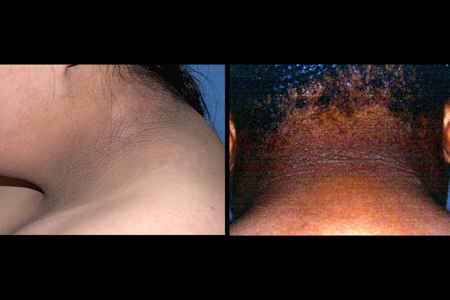
- Dark, Velvety Patches of Skin, Especially on the Neck or Armpits
This is the most visually distinctive and most underrecognized warning sign on this list.
Acanthosis nigricans is a skin condition that produces dark, thick, velvety patches, most commonly on the back of the neck, in the armpits, or in the groin.
It’s strongly associated with insulin resistance and is often the earliest visible indicator that someone’s blood sugar regulation is off.
According to the Mayo Clinic, most people who develop acanthosis nigricans have already become insulin resistant.
This can be easily mistaken for a skin condition or simply a cosmetic issue. It’s not harmful on its own, but its presence is a meaningful signal worth discussing with your primary care physician, especially if you have other risk factors for type 2 diabetes.
The American Academy of Dermatology notes that acanthosis nigricans (see picture below, courtesy of AAD) developing on the back of the neck may be the first sign that someone has diabetes or prediabetes.
9. Mood Changes, Brain Fog, or Difficulty Concentrating
Fluctuating blood sugar affects the brain directly. When glucose levels are elevated or unstable, many people experience irritability, difficulty concentrating, mental fatigue, or a general sense of cognitive cloudiness.
This is closely tied to the same mechanism that drives physical fatigue, as the brain depends heavily on stable glucose availability, and when that supply is disrupted, cognitive function suffers.
This symptom is rarely connected to blood sugar by those experiencing it. It tends to be attributed to stress, anxiety, poor sleep, or simply “having a lot going on.”
It can also overlap with symptoms of depression, which itself has a documented bidirectional relationship with type 2 diabetes, meaning each condition increases the risk of the other.
We routinely screen newly diagnosed type 2 diabetes patients for depression and especially vice versa. Diabetes is a chronic disease that can be mentally debilitating for many patients; Adults with Type 2 Diabetes have roughly double the risk of depression compared to adults without the diagnosis.
On the other side, many symptoms such as fatigue, slower perceived cognitive function, and sleep disruption, which could appear to be associated with depression, may be stemming from a metabolic disorder such as diabetes.
If these symptoms are indeed manifesting from depression, they could contribute to the development of Type 2 Diabetes, so it is important to routinely and simultaneously screen for both of these conditions
Note: Ironically, one of the most overlooked “symptoms” of Type 2 Diabetes is the absence of symptoms altogether, as the diagnosis can go without being recognized by patients for years before symptoms and complications that are harder to reverse become apparent. This delay in symptoms is why it is so important for patients to be routinely screened to catch the diagnosis early and manage sooner.
Who Should Be Screened for Type 2 Diabetes (Even Without Symptoms)?
Now that you’ve seen nine common early warning signs of type 2 diabetes, let’s talk about screening.
Because type 2 diabetes is so often asymptomatic in early stages, screening based on risk factors, rather than waiting for symptoms, is the more reliable strategy.
The American Diabetes Association recommends screening for all adults 35 and older, and earlier for anyone with one or more of the following risk factors:
- Body mass index (BMI) of 25 or higher (or 23 or higher for Asian Americans)
- Family history of type 2 diabetes (parent or sibling)
- History of gestational diabetes or polycystic ovary syndrome (PCOS)
- High blood pressure (130/80 mmHg or higher)
- Abnormal cholesterol or triglyceride levels
- History of cardiovascular disease
- Sedentary lifestyle
- Race or ethnicity associated with higher risk (Black, Hispanic, Native American, Asian American, or Pacific Islander)
Prediabetes, a state in which blood sugar is elevated but not yet in the diabetic range, is detectable through a simple blood test (fasting glucose, HbA1c, or an oral glucose tolerance test).
With lifestyle changes, progression from prediabetes to type 2 diabetes can be prevented or significantly delayed.
Weight loss remains the single most impactful aspect to manage and reverse prediabetes. While both a reduced-calorie eating plan and increased physical activity contribute to effective weight loss, we generally tell patients that the more important of the two is one’s eating plan.
Properly calculating how many calories you eat allows you to systematically reduce your daily calories and consistently lose weight, where decreasing 5-7% of baseline bodyweight has been found to greatly reduce the risk that comes from prediabetes.
Case Study: The Importance of Screening for Type 2 Diabetes
We had a patient recently who was feeling “off” for several months and thought it was due to a stressful life transition, which was leading to higher difficulties with sleep, lower energy levels, and not generally feeling well most days.
They were told by loved ones that they may be depressed and should consider medication like an antidepressant. On routine lab work, their A1C was well above levels to warrant insulin management as initial treatment in order to start regulating their sugar levels properly.
Within a few months of treatment, the patient’s previous symptoms such as depressed mood and lower energy levels were greatly improved, making them realize that most, if not all, of their symptoms were stemming from untreated diabetes.
This exemplifies the importance of screening for Type 2 Diabetes, even if you’re experiencing symptoms that could easily be written off as something else. It can result in meaningful improvement of symptoms, potentially increasing your overall quality of life.
What COPC’s Diabetes Management Program Offers
If you’re diagnosed with prediabetes or type 2 diabetes, a diagnosis is the beginning of the story, not the end.
At Central Ohio Primary Care, our Diabetes Management Program was built specifically to give COPC patients the tools to manage their condition and, in many cases, improve it significantly.
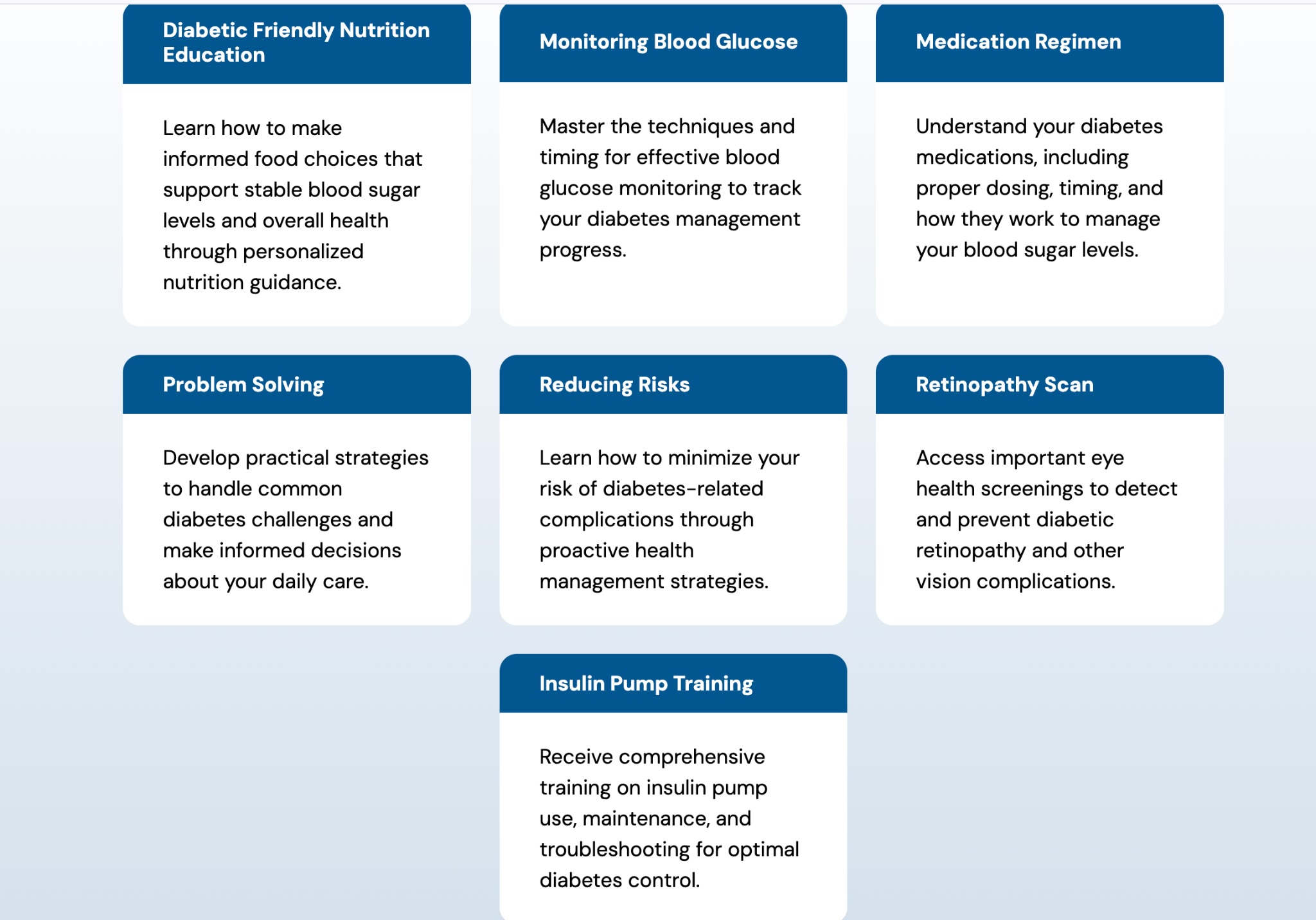
The program is structured around one-on-one education and coordinated care between our diabetes team and your COPC physician. It covers:
- Nutrition education tailored to blood sugar management.
- Blood glucose monitoring, including how to do it correctly, when to check, and how to interpret what you’re seeing.
- Medication management, including understanding what your medications do, how to take them, and what to watch for.
- Retinopathy screening, which will check your eyes to detect early changes before they affect your vision.
- Insulin pump training, if applicable.
- Problem-solving strategies for the real-life situations that affect blood sugar management.
The program requires a referral from your COPC physician and is designed to work with your insurance. To get started, ask your COPC provider about a referral at your next visit, or schedule an appointment if you’ve been experiencing any of the symptoms described above.
For families navigating a diagnosis in a younger patient, we also have resources on managing diabetes in a school setting.
Don’t Wait for an Obvious Sign to Take Action
“It is never too late to make impactful changes to your lifestyle that will benefit your overall health. Always know that you are capable of making great choices which can help prevent the complications from type 2 diabetes, reverse the risk from prediabetes, and improve your quality of life!” – Dr. Christopher McCoy, COPC Physician.
If you recognize several of the symptoms described above, or if you have risk factors for type 2 diabetes and haven’t been screened recently, we recommend making an appointment. A simple blood test is all it takes to know where you stand.
Schedule an appointment with a COPC physician through MyChart or by calling (614) 326-4646.
Sources
- Centers for Disease Control and Prevention, National Diabetes Statistics Report, 2023 data
- Centers for Disease Control and Prevention, A U.S. Report Card: Diabetes by the Numbers
- Centers for Disease Control and Prevention, Diabetes and Mental Health, May 2024
- Centers for Disease Control and Prevention, Prevent Type 2 Diabetes: Talking to Your Patients About Lifestyle Change, May 2024
- American Academy of Dermatology, Diabetes Warning Signs That Appear on Skin
- Mayo Clinic, Acanthosis Nigricans: Symptoms and Causes
- National Institutes of Health / NCBI, Detection of Subclinical Diabetic Neuropathy in Type 2 Diabetes, 2026