

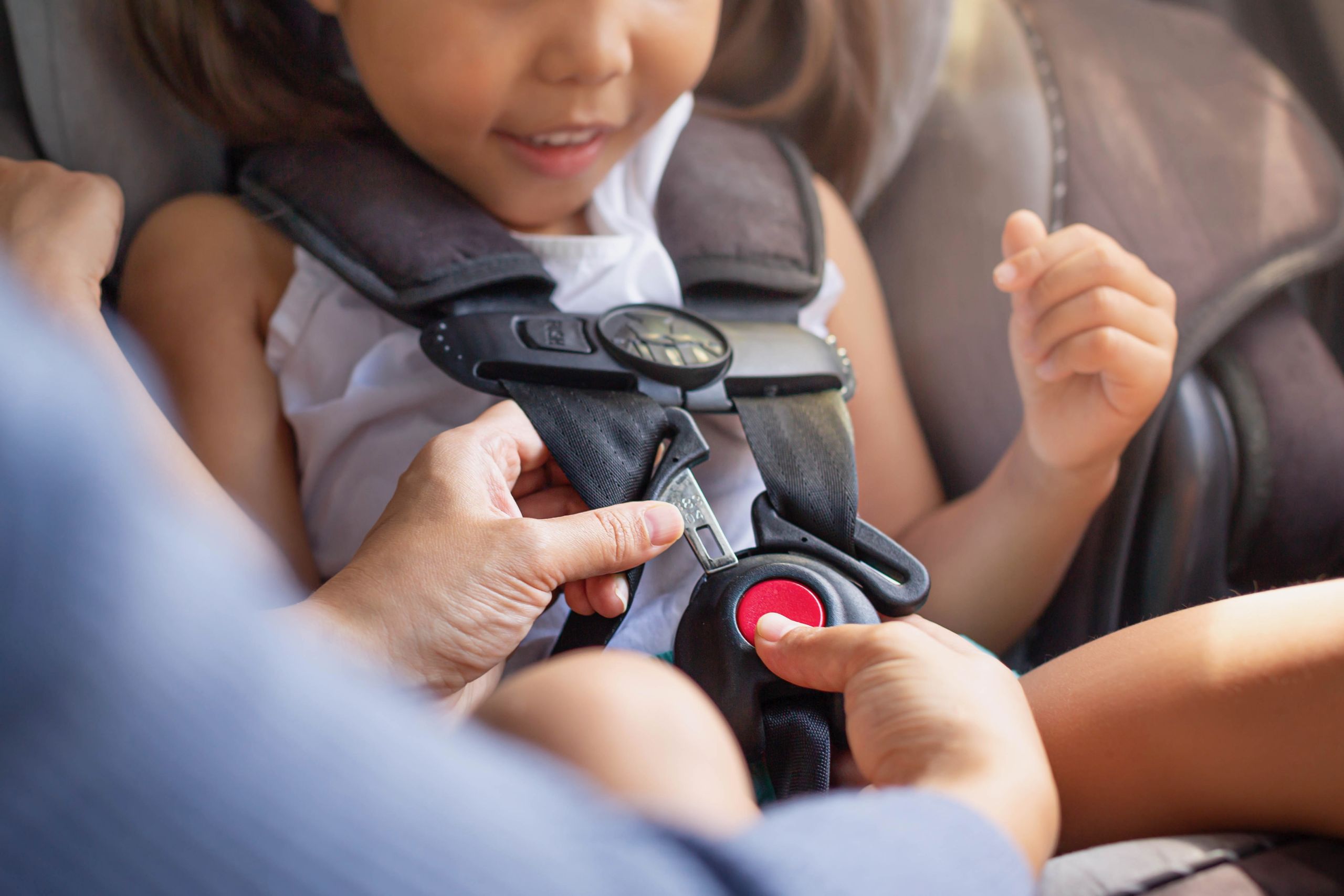
Choosing the right car seat—and using it correctly—is one of the best ways to keep your child safe on the road. Car seats and booster seats help protect children during a crash and reduce the risk of serious injury. Because children grow quickly, it’s important to review your child’s car seat fit regularly and stay up to date on current car seat safety recommendations.
The American Academy of Pediatrics (AAP) recommends that infants and toddlers ride in a rear-facing car seat as long as possible, until they reach the maximum height or weight allowed by their car seat manufacturer. Rear-facing seats offer the best protection for a child’s head, neck and spine.
After outgrowing a rear-facing seat, children should transition to a forward-facing car seat with a five-point harness. They should remain in a harnessed seat until they reach the height or weight limit listed by the manufacturer.
Once children outgrow a forward-facing harnessed seat, they should move to a booster seat. Booster seats help position the vehicle seat belt properly across a child’s chest and lap. Most children need a booster until they are 4 feet 9 inches tall, typically between 8 and 12 years old.
Children younger than 13 years old should always ride in the back seat.
Car Seat Safety Tips
1. Keep your child rear-facing as long as possible
Rear-facing car seats provide the best protection for infants and toddlers. Check your seat’s height and weight limits before switching to forward-facing.
2. Make sure the car seat is installed correctly
Car seats should be installed in the back seat, ideally in the center seat if a secure fit can be achieved. Follow both your car seat manual and vehicle owner’s manual. When installed correctly, the seat should move less than 1 inch side to side or front to back.
3. Check harness fit every ride
Harness straps should lie flat and fit snugly against your child’s body. You should not be able to pinch extra webbing at the shoulder. The chest clip should sit at armpit level.
4. Remove bulky coats before buckling
Heavy coats or puffy jackets can prevent harness straps from fitting snugly. Buckle your child first, then place a blanket over them if needed for warmth.
5. Replace damaged or expired car seats
Car seats should be replaced after expiration or after a moderate or severe crash—even if no damage is visible.
When Should My Child Move to a Booster Seat?
Many parents ask when it’s safe to switch to a booster seat. The right time depends on your child’s height, weight and current car seat limits. In general, children should remain in a forward-facing harnessed seat as long as possible before transitioning to a booster.
If you’re unsure whether your child is in the right seat for their age and size, talk with your pediatrician at your next visit.
Sources:
American Academy of Pediatrics. Car Seats: Information for Families. HealthyChildren.org. Updated 2025. Available at: HealthyChildren.org – Car Seats: Information for Families