
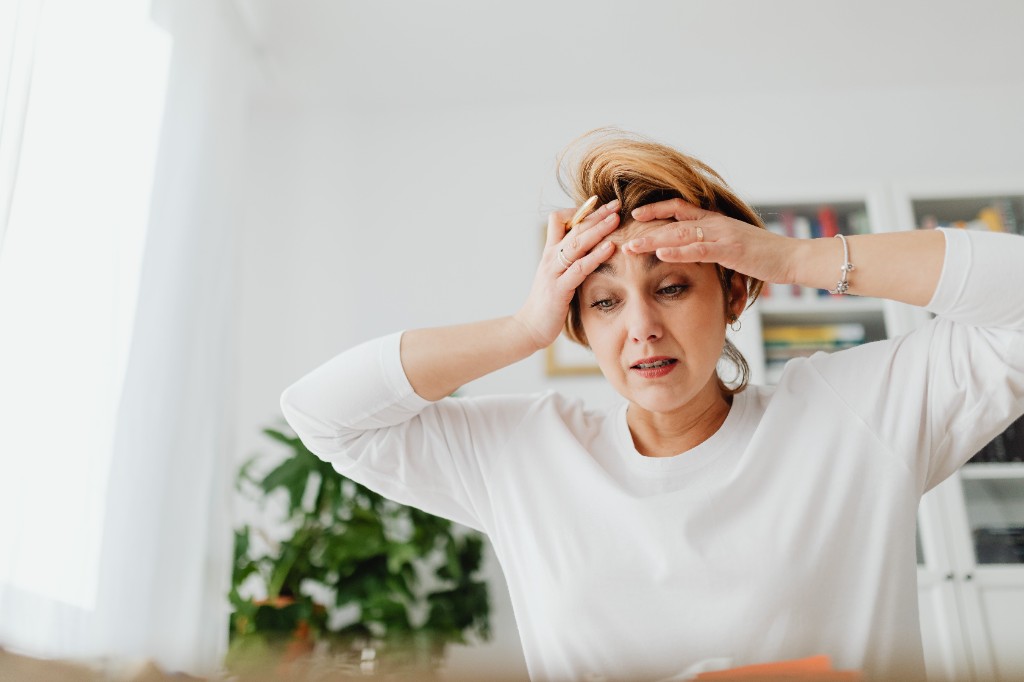
Perimenopause comes with a lot of symptoms: fatigue, brain fog, mood swings, and weight gain, to name a few.
While these are all real and common symptoms of perimenopause, they can also be the result of:
- An underactive thyroid
- Iron deficiency
- Depression and anxiety
- Insulin resistance
Nearly 40% of perimenopausal women report being misdiagnosed (according to a 2025 survey commissioned by health and wellness company Biote), with clinicians treating anxiety or depression as isolated conditions without addressing the underlying hormonal picture.
The reverse can also happen: conditions that are fully treatable on their own get folded into a perimenopause explanation and can go unaddressed for years.
Getting a clear answer on whether you’re dealing with perimenopause or something else is essential to finding the right treatment.
One of our COPC physicians breaks down what you need to know in this post.
Disclaimer: This article is for informational purposes only and is not a substitute for medical advice. Consult your physician for guidance specific to your health history and situation.
What Is Perimenopause?
Perimenopause is the transition period leading up to menopause, during which estrogen and progesterone levels decline but fluctuate unpredictably along the way. It is those fluctuations that drive most symptoms.
According to the Cleveland Clinic, perimenopause typically begins in the mid-40s, though it can start as early as the mid-30s or as late as the mid-50s. It lasts an average of four years, though for some women it can last up to eight years.
The hallmark symptoms of perimenopause include:
- Irregular periods (longer, shorter, heavier, lighter, or skipped)
- Hot flashes and night sweats
- Joint pain
- Sleep disruption
- Mood changes, irritability, and anxiety
- Brain fog and difficulty concentrating
- Fatigue
- Weight changes, particularly around the abdomen
- Hair thinning
- Decreased libido
- Vaginal dryness
There is no definitive blood test that confirms perimenopause. Hormone levels can fluctuate so significantly during this transition that a single FSH or estradiol reading can be misleading or inconclusive.
Perimenopause is largely a clinical diagnosis made by a physician based on symptoms, age, patient history, and sometimes labs.
How Do Thyroid Issues Overlap With Perimenopause?
Thyroid disease and perimenopause are not frequently confused with each other. However, they share several symptoms, so your physician may check your thyroid when evaluating perimenopausal symptoms.
As discussed in COPC’s blog on thyroid dysfunction and fatigue, thyroid disease is significantly underdiagnosed in women.
According to the American Thyroid Association, women are five to eight times more likely than men to develop thyroid disease, and up to 60% of people with thyroid conditions do not know they have one.
The timing between thyroid issues and perimenopause can complicate things because both are frequently diagnosed in women in the same age range.
For example, Hashimoto’s disease, the most common cause of hypothyroidism in the United States, is an autoimmune condition that tends to develop gradually and is most frequently diagnosed in women in their 30s to 50s. That is the same window as perimenopause.
Here’s a chart of symptoms hypothyroidism and perimenopause share:
| Symptom | Perimenopause | Hypothyroidism |
| Fatigue | Yes | Yes |
| Brain fog | Yes | Yes |
| Weight gain | Yes | Yes |
| Mood changes/depression | Yes | Yes |
| Sleep disruption | Yes | Yes |
| Hair thinning | Yes | Yes |
| Cold sensitivity | Occasionally | Yes |
| Irregular periods | Yes | Yes |
| Dry skin | Occasionally | Yes |
Hyperthyroidism (overactive thyroid) can also overlap with perimenopause, with common symptoms including hot flashes, palpitations, anxiety, insomnia, and sweating.
The good news is that TSH and free T4 blood tests can identify or rule out thyroid dysfunction.
These tests are relatively inexpensive, routinely ordered, and available through COPC’s Laboratory Services. If thyroid disease runs in your family history, it’s worth asking your physician whether testing makes sense for you.
If you’re in the Central Ohio area, we have three laboratory service locations (Reynoldsburg, Columbus, and Westerville), where we can test for thyroid dysfunction.


How Does Iron Deficiency Overlap With Perimenopause?
Iron deficiency is one of the most commonly overlooked causes of perimenopause-like symptoms.
This is partly because heavy or irregular menstrual bleeding, which is itself a classic symptom of perimenopause, is also one of the leading causes of iron depletion in women.
Iron is essential for neurotransmitter production. It helps the brain make serotonin and dopamine, two chemicals that regulate mood and focus, which is why low iron is linked to mood changes and anxiety.
The mood and cognitive effects of iron deficiency, which include irritability, anxiety, difficulty concentrating, and low motivation, can be clinically indistinguishable from hormonally driven mood changes during perimenopause.
This can turn into a cycle: Perimenopause causes heavier periods. Heavier periods deplete iron. Iron depletion produces symptoms that look like perimenopause. Perimenopause gets diagnosed, and the iron deficiency goes untreated, with symptoms persisting.
When iron deficiency is the primary cause of your symptoms, it can be fairly straightforward to diagnose.
Ferritin levels (stored iron, more sensitive than standard hemoglobin testing) can be checked with a blood test. If deficiency is confirmed, supplementation or dietary changes may resolve many symptoms.
How Do Depression and Anxiety Overlap With Perimenopause?
The relationship between perimenopause and mental health is real and bidirectional, which means perimenopause can increase the risk of depression and anxiety, and vice versa.
According to research cited in the Biote survey, women are 1.5 to 2 times more likely to experience depressive symptoms during perimenopause than during their premenopausal years.
This is partly biological. Hormonal fluctuations directly affect serotonin and GABA pathways, the same neurotransmitter systems that regulate mood and anxiety. This can result in mood changes, including irritability, anxiety, depression, and sleep disturbance.
But the same 2025 survey found that 33% of perimenopausal women had received diagnoses and treatment for anxiety, 27% for depression, 25% for mood swings, and 13% for panic attacks, with the hormonal component of their symptoms going unaddressed.
Among women prescribed medication for mental health conditions, 39% believed they were not diagnosed appropriately.
Depression and anxiety are not always hormonal. A patient whose mood symptoms are primarily rooted in clinical depression or generalized anxiety disorder will not have those conditions resolved by addressing perimenopause.
Treating the wrong condition, or only one condition when both are present, leaves part of the problem unaddressed.
A thorough evaluation looks at both the hormonal and psychiatric picture. Treatment may involve some trial and error of medications, including MHT (menopausal hormone therapy), SSRIs (selective serotonin reuptake inhibitors), and SNRIs (serotonin and norepinephrine reuptake inhibitors). Healthy habits, like good sleep hygiene, regular exercise, and a healthy diet, are also recommended.
If antidepressants or anti-anxiety medications have been prescribed without any hormonal evaluation, it’s worth a conversation with your physician.
How Does Insulin Resistance Overlap With Perimenopause?
Insulin resistance, a precursor to type 2 diabetes, produces fatigue, brain fog, mood fluctuations, and weight gain, particularly around the abdomen.
Estrogen plays a protective role in glucose metabolism. As estrogen levels decline during perimenopause, insulin sensitivity often decreases, and blood sugar regulation becomes less efficient.
This means insulin resistance and perimenopausal symptoms can develop simultaneously, compound each other, and be difficult to separate clinically.
Women in perimenopause who experience significant weight gain despite no clear change in diet or exercise, or who notice energy crashes after eating, may benefit from screening for blood sugar dysregulation alongside hormonal evaluation.
An HbA1c or fasting glucose test, both available through COPC’s Laboratory Services, can provide clarity.
What an Evaluation for Perimenopause Looks Like
If you are experiencing symptoms that could be perimenopause, here is what your physician may order or consider:
Blood work that covers the full picture:
- TSH (thyroid-stimulating hormone) and free T4 (thyroid function)
- Ferritin (stored iron, more sensitive than hemoglobin alone for detecting early iron deficiency)
- CBC (complete blood count)
- Fasting glucose and HbA1c (blood sugar)
- FSH (follicle-stimulating hormone) and estradiol (hormonal context, though interpreted carefully given fluctuation)
- Vitamin D (deficiency compounds fatigue and mood symptoms)
- Comprehensive metabolic panel (kidney function, liver enzymes, electrolytes)
Note: Blood work may sometimes be helpful but is not always necessary to diagnose perimenopause. Your physician should help guide you through your lab results and note any relevant findings.
History and context your physician will want:
- Your menstrual history and how your cycle has changed
- Family history of thyroid disease, early menopause, or autoimmune conditions
- Sleep patterns and how they have changed
- Mood history and whether symptoms are new or escalating
- Any recent significant stressors (which independently affect all of the above)
When to See a Physician About Symptoms Related to Perimenopause
In our clinical experience at COPC, it is amazing how much better some women feel once they are treated appropriately for perimenopause.
If you are experiencing several of the following, we recommend scheduling a visit with your primary care physician:
- Irregular periods that represent a change from your normal pattern
- Fatigue that is not explained by sleep or lifestyle
- Mood changes that feel disproportionate or new
- Hot flashes or night sweats
- Joint pain
- Brain fog or difficulty with word retrieval or concentration
- Unexplained weight changes
- Hair thinning or changes in skin
- A sense that something has shifted in how you feel (even if you cannot name it)
COPC’s primary care physicians and internal medicine specialists, including those who specialize in perimenopause and women’s health, can help you evaluate the full picture.
For complex hormonal or thyroid presentations, COPC’s Endocrinology Specialists and Columbus Endocrinology practices are available for referral.
Schedule an appointment with a COPC physician through MyChart or by calling (614) 326-4646.
Sources
- Biote, Perimenopause Focus: Misunderstood and Misdiagnosed, Survey Reveals Hidden Crisis, November 12, 2025.
- Cleveland Clinic, Perimenopause: Age, Stages, Signs, Symptoms and Treatment, July 29, 2024.
- American Thyroid Association, General Information/Press Room
- Cleveland Clinic, Hashimoto’s Disease, September 14, 2026.
- Kim J, Wessling-Resnick M. Iron and mechanisms of emotional behavior. Journal of Nutritional Biochemistry. November 2014.
- Munro MG. Heavy Menstrual Bleeding, Iron Deficiency, and Iron Deficiency Anemia: Framing the Issue. International Journal of Gynaecology and Obstetrics. August 2023;162(Suppl 2):7-13. doi:10.1002/ijgo.14943.